
CHW Corps: Building a Health Equity Workforce for Diverse Californians
An initiative designed to strengthen and expand the CHW workforce pipeline, recruit and train diverse Californians from the communities that need them most, and advance health equity across the state.
About the Author: HUMANDREAM Staff

CHW Corps: Building a Health Equity Workforce for Diverse Californians
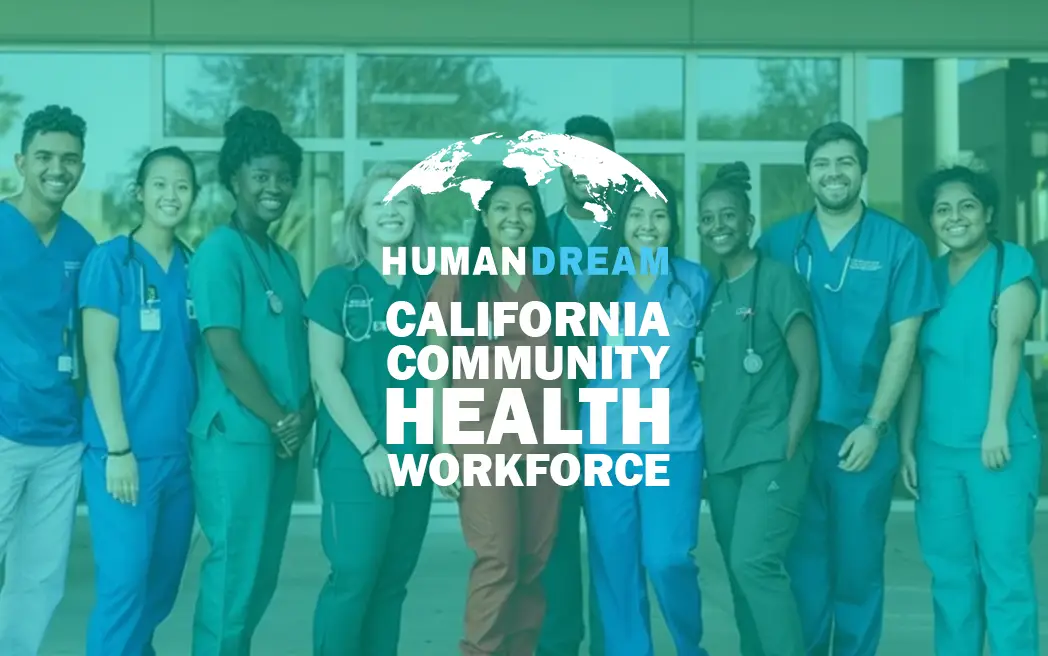
People in communities of color across Los Angeles are navigating a health crisis without a workforce that looks, sounds, or lives like them. Community health workers, outreach workers, and care navigators deliver the education, navigation, and preventive support that make health services accessible to the communities that clinical systems too often fail to reach. Yet these roles remain understaffed, underpaid, and without clear career pathways for the very people most capable of filling them. CHW Corps is built on a straightforward premise: the communities most affected by California’s health equity crisis contain the workforce capable of responding to it.
What makes CHWs from these communities specifically effective is not simply their training, but their identity. Workers who share the generational experience, cultural fluency, and lived realities of the people they serve bring a form of trusted access and peer credibility that credentialed clinicians frequently cannot replicate. Shared language, shared neighborhood, shared experience navigating health systems as a person of color: these are not supplementary qualities. They are the core of community-based effectiveness.
HUMANDREAM Foundation, a minority- and woman-founded California 501(c)(3), is launching CHW Corps as an initiative designed to strengthen and expand the CHW workforce pipeline from a community college-based public health training program and Hispanic-Serving Institution in Long Beach. The community college partner offers an established CHW Certificate program and three credential pathways, with training infrastructure aligned to California’s Public Health Workforce Strategy, Guided Pathways, and the Strong Workforce Program. At the center of this initiative is a student body that is majority Latino/x, Black, Asian, and Pacific Islander: the same communities that experience California’s most acute health workforce shortages and care access barriers, and the most credible pipeline for closing them.
California has expanded CHW support through Medi-Cal and state workforce investments, and the policy environment has never been more favorable for community-based health worker integration. CHW workforce infrastructure across the state, however, remains uneven and underfunded relative to documented need. Statewide data shows that hospitals would need to hire up to twelve times more CHWs than current staffing levels to meet demand. Los Angeles County faces a documented shortage of service professionals across the public health sector. CHW Corps addresses this gap directly by building a functioning, community-rooted pipeline that does not wait for statewide infrastructure to catch up.
THE WORKFORCE PIPELINE
STAGE 1 Attraction and Recruitment
CHW Corps recruits 30 to 40 students per cohort from predominantly Latino/x, Black/African American, and Pacific Islander neighborhoods in Long Beach, where health workforce shortages are most severe and the absence of representative providers most acute. Recruitment operates through the college’s established infrastructure: counseling, targeted community outreach, and orientation. The student body is over 60% Hispanic/Latino and predominantly low-income, positioning the program to produce graduates who reflect and understand the communities they will serve.
STAGE 2 Development and Training
Students complete the CHW Certificate of Achievement through the community college’s credentialed training infrastructure. The curriculum covers health outreach, education, care navigation, culturally responsive engagement, and community-based preventive care. The training model includes behavioral and social well-being curriculum, among them trauma-informed care and crisis recognition, preparing students to respond to both physical and behavioral health challenges facing underserved communities. Students complete credit-bearing, supervised fieldwork with health systems, community organizations, and social service partners across Long Beach and the broader Los Angeles Basin, building verified, employer-facing evidence of workforce-ready competencies documented through GloCha’s digital portfolio and fieldwork verification platform.
STAGE 3 Placement and Entry to Practice
Graduates connect to employment through a formalized employer network targeting Federally Qualified Health Centers, community health organizations, school-based health programs, and county agencies. Fieldwork placements are structured to create direct pathways to employment, with active employer relationship management by HUMANDREAM Foundation. HUMANDREAM deploys an outcomes tracking system measuring graduate employment rates, CHW retention, service delivery metrics, and health outcomes, generating the evidence base required by future funders, Medi-Cal payers, and workforce partners.
STAGE 4 Upskilling and Career Progression
Retention is designed into the model, not appended. Mentorship pairs placed CHWs with experienced providers. SB 225 certification creates concrete career ladder progression, with certification-linked wage advancement that directly addresses the low compensation documented as a field-wide retention barrier. Provider wellness supports, including peer supervision and access to behavioral health resources, address the burnout and secondary stress that make CHW retention difficult across the sector. HUMANDREAM Foundation tracks alumni employment and progression, supporting long-term workforce sustainability beyond the training period.
CREDENTIAL ARCHITECTURE
CHW Corps integrates credentialing as a structural support for workforce viability and career progression, not as a program endpoint. The credential architecture is built in three integrated layers.
LAYER 1 CHW Certificate of Achievement
Students complete the community college’s CHW Certificate of Achievement, a focused, credit-bearing credential that does not require a four-year degree, reducing both the cost and time to enter the health workforce. This certificate is the foundation of the pipeline and the entry point for all subsequent credential support.
LAYER 2 SB 225 State Certification Support
Graduates are supported through California’s SB 225 state CHW certification process, providing a portable, employer-recognized credential that health systems, FQHCs, and Medi-Cal managed care plans can recognize and reimburse. SB 225 integration converts program completion into a statewide, reimbursable workforce credential, addressing the gap left by California’s uneven CHW certification infrastructure.
LAYER 3 Career Progression and Upskilling
SB 225 certification activates wage advancement pathways, increases employer competitiveness, and enables Medi-Cal managed care billing eligibility for employing organizations. In a field where most workforce programs stop at training, this layer converts graduates into a financially sustainable workforce asset for the health systems and community organizations that hire them.
EQUITY FOUNDATION
The program’s equity and accountability infrastructure is informed by Ruby Guillen, MSW, White House President’s Lifetime Achievement Award recipient, Chair of the American Public Health Association’s Health Informatics and Information Technology Section, and HUMANDREAM Advisory Board member. Guillen brings over two decades of child welfare and emergency response expertise spanning 7,000 or more case investigations across Los Angeles County, alongside her own lived experience as a recipient of LA County child welfare services. Her public health informatics expertise directly governs CHW Corps’ outcomes tracking infrastructure, and her investigative background in system-impacted families and community health informs the program’s provider accountability framework.
STATEWIDE REPLICATION AND KNOWLEDGE INFRASTRUCTURE
A core deliverable of CHW Corps is a publicly available CHW Workforce Development Toolkit: a documented, replicable framework for community colleges and community-based organizations across California seeking to expand CHW training capacity. Engagement records and community health data generated through the program will become permanent public assets. The Toolkit will be shared statewide with community-based CHW training programs, workforce development initiatives, and public agencies, enabling partners to host and engage future student cohorts in community-based fieldwork.
ABOUT HUMANDREAM FOUNDATION
HUMANDREAM Foundation is a minority- and woman-founded California 501(c)(3) nonprofit committed to advancing health equity and expanding community-based workforce development. The Foundation builds sustainable pathways into health careers for adults from historically marginalized communities, with a focus on producing a workforce that reflects the diversity and lived experience of the communities it serves.
Why This is Important
What’s At Stake
Without targeted support for organizations working to improve the lives of women and children globally, the future of millions of people is at risk. The HUMANDREAM Funds aim to raise money to help transform the lives of millions of women and children worldwide.
What can we do?
Consumer donations will be enabled around the world through integrated payments & commerce technology infrastructure. Be a part of this movement and donate today!
Join the Movement
By clicking Sign Up, you agree to our Terms and Privacy Policy.