
Bridging the Gap: A Community Health Worker Workforce Pipeline and Digital Credentialing Model for Diverse Californians
A community-based workforce initiative to expand the CHW pipeline, strengthen digital credentialing, and advance health equity across California.
About the Author: HUMANDREAM Staff

Bridging the Gap: A Community Health Worker Workforce Pipeline and Digital Credentialing Model for Diverse Californians
California faces a growing and urgent shortage of trained Community Health Workers (CHWs) — the frontline professionals who connect underserved communities to health care, preventive services, and social resources. At precisely the moment when demand for community-based health workers has never been higher, driven by Medi-Cal’s expanded CHW benefit, an aging and increasingly diverse population, and the ongoing erosion of safety-net infrastructure, the state’s investment in CHW training has stalled. In 2022, California authorized $281 million to recruit, train, and certify 25,000 new CHWs. The state has since eliminated its planned certification program and rolled back nearly all of that funding, leaving California’s CHW workforce infrastructure fragmented and underfunded.
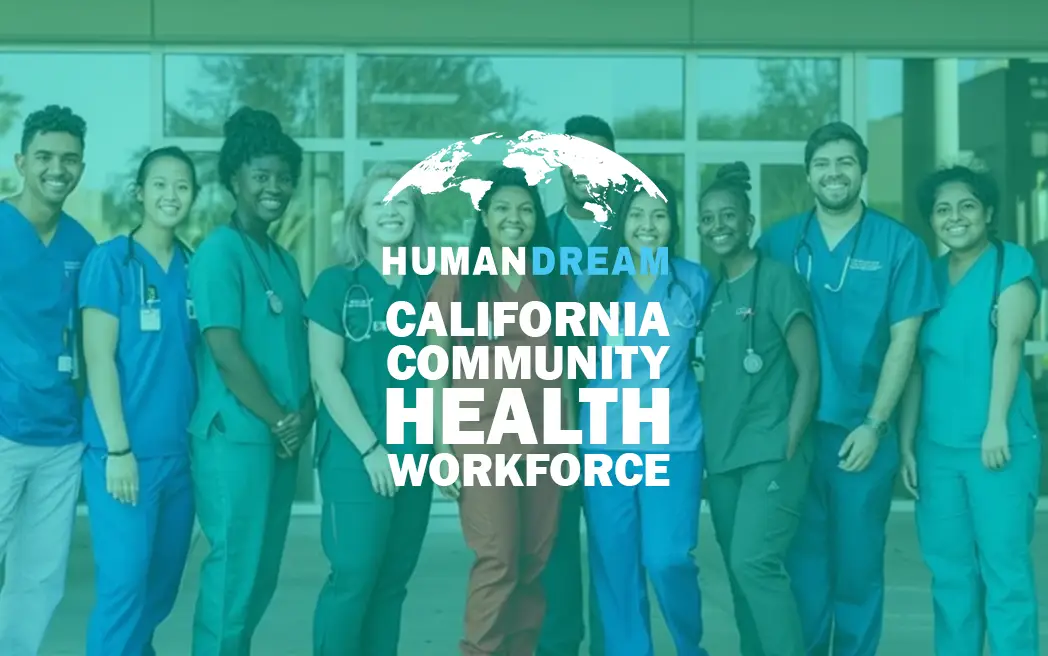
HUMANDREAM Foundation, a minority- and woman-founded California 501(c)(3) nonprofit, is stepping into that gap. The Foundation is launching Bridging the Gap: A Community Health Worker Workforce Pipeline and Digital Credentialing Model for Diverse Californians — an initiative designed to strengthen and expand the CHW workforce pipeline from a community college-based public health training program in Long Beach, while introducing a digital credentialing infrastructure that documents student skills in a portable, employer-facing format.
THE WORKFORCE PIPELINE
At the center of this initiative is a community college-based public health training program in Long Beach whose student body is majority Latino/x, Black, Asian, and Pacific Islander — the same communities that experience California’s most acute health workforce shortages and care access barriers.
Through a community-based workforce training model, CHW certificate students engage in 60 to 240 hours of credit-bearing, supervised fieldwork per semester — placed with health systems, community organizations, and social service partners across Long Beach and Los Angeles basin. This Workforce Engagement Model documents active student participation in community-based health education and outreach, ensuring that graduates are not only credentialed but experienced in the specific competencies — outreach, care navigation, health education, and culturally responsive engagement — that employers and Medi-Cal managed care plans urgently need.
The CHW model embedded in this training program includes behavioral and social well-being curriculum, including trauma-informed care and crisis recognition, preparing students to respond to both the physical and behavioral health impacts of the challenges facing California’s most underserved communities. This is a trained workforce equipped to deliver community-based solutions. Existing coursework, fieldwork infrastructure, and community partnerships ensure the initiative builds on a foundation that is already working.
DIGITAL CREDENTIALING AND WORKFORCE DOCUMENTATION
A persistent barrier to CHW workforce integration has been the absence of portable, verifiable documentation of field competencies. California’s rollback of its statewide CHW certification program has sharpened this gap, leaving graduates without standardized credentials that employers and managed care organizations can readily evaluate.
Bridging the Gap addresses this directly through a partnership with GloCha (Global Challenges Action Empowerment), an international digital public infrastructure partner with experience deploying community health challenges mapping tools, action registries, and digital credentialing systems in partnership with UN-affiliated institutions. Within the initiative, GloCha’s platform enables CHW students to map local community health challenges, log supervised fieldwork activities with verified documentation, and build digital portfolios that provide portable, employer-facing evidence of their workforce-ready competencies.
This digital infrastructure is designed to scale: the same tools that document CHW field activities today can expand in future phases to support broader community health data collection, resilience mapping, and student impact reporting — contributing to a statewide knowledge base for community-based workforce development.
STATEWIDE REPLICATION AND KNOWLEDGE DISSEMINATION
A core deliverable of this initiative is a publicly available CHW Workforce Development Toolkit — a documented, replicable framework for other California community colleges and community-based organizations seeking to expand CHW training capacity. The Toolkit will be available statewide for replication by community-based CHW training programs and workforce development initiatives across California, and will be shared with local community-based organizations and public agencies to support continued outreach and to expand work-based learning opportunities, enabling these partners to host and engage future student cohorts in community-based fieldwork.
The engagement records and community health data generated through this initiative will become permanent public assets — a foundation for evidence-based advocacy, workforce planning, and continued investment in community-based health infrastructure.
ABOUT HUMANDREAM FOUNDATION
HUMANDREAM Foundation is a minority- and woman-founded California 501(c)(3) nonprofit organization committed to advancing health equity, expanding community-based workforce development, and building the infrastructure needed to connect underserved populations to meaningful health and human services careers. The Foundation’s leadership brings direct experience in community-based public health initiatives, outreach and engagement with historically underserved communities, and partnership development across nonprofit, academic, and UN-affiliated institutions. HUMANDREAM’s advisory board includes Ruby Guillen, Chair of the U.S. delegation on UN Human Rights, whose experience in human rights advocacy and community health workforce policy informs the initiative’s equity framework.
Why This is Important
What’s At Stake
Without targeted support for organizations working to improve the lives of women and children globally, the future of millions of people is at risk. The HUMANDREAM Funds aim to raise money to help transform the lives of millions of women and children worldwide.
What can we do?
Consumer donations will be enabled around the world through integrated payments & commerce technology infrastructure. Be a part of this movement and donate today!
Join the Movement
By clicking Sign Up, you agree to our Terms and Privacy Policy.